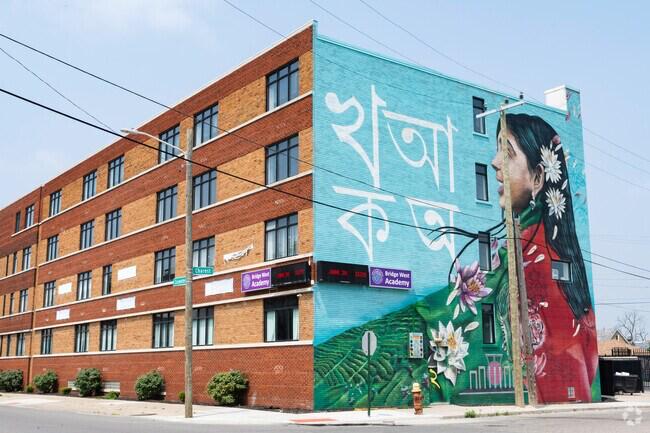
Written By- Jubel Ahmed, Founder and CEO of R2M Realty
Metro Detroit has long been a gateway for immigrants seeking opportunity, stability, and community. Today, a new chapter in that story is unfolding—one led by Bangladeshi immigrants who are reshaping neighborhoods, strengthening local economies, and contributing to a vibrant cultural identity across the region.
From Hamtramck to Warren, Sterling Heights to Troy, and across Shelby and Macomb Township, Bangladeshi Americans are not only settling in Southeast Michigan—they are investing in it. Their growing presence is influencing housing markets, launching businesses, building institutions, and reinforcing Metro Detroit’s reputation as one of the most diverse regions in the United States.
A Historic Gateway for Immigration
The story begins in cities like Hamtramck, a small but culturally powerful enclave surrounded by Detroit. Once known as a Polish immigrant hub tied to the automotive boom, Hamtramck has transformed into one of the most diverse cities in Michigan.
Bangladeshi immigrants first began arriving in small numbers as early as the 1930s, but the most significant waves came in the late 1980s and 1990s. Many relocated from New York—especially Queens—drawn by affordable housing, job opportunities, and the presence of an already growing Muslim community. (Wikipedia)
By the early 2000s, Hamtramck had become the epicenter of Bangladeshi life in Michigan. In fact, at one point, roughly 75% of Bangladeshi residents in the state lived in or around Hamtramck. (Wikipedia)
Today, that legacy continues, but the community is no longer confined to one city.
Expansion Beyond Hamtramck
As families established roots and achieved economic stability, many began moving outward into the suburbs—mirroring the traditional pattern of immigrant upward mobility in America.
Cities like Warren and Sterling Heights in Macomb County have become major destinations. Warren alone is home to nearly 30,000+ Bangladeshi residents and 9000+ homeowners, while Sterling Heights continues to see steady growth. (Neilsberg)
This suburban expansion reflects several key factors:
-
Desire for larger homes and better school districts
-
Access to safer, quieter neighborhoods
-
Proximity to jobs and business opportunities
-
Continued connection to cultural hubs like Banglatown
The result is a regional network of Bangladeshi communities stretching across Wayne, Macomb, and Oakland counties—the tri-county backbone of Metro Detroit. Real Estate Professionals, Loan officers are contributing significantly towards the expansion.
Driving Housing Demand and Property Values
One of the most visible impacts of this migration is in the housing market.
Bangladeshi immigrants have become active homebuyers, particularly in neighborhoods that offer affordability and long-term value. Many arrive with a strong emphasis on homeownership, often purchasing multi-generational homes or investing in properties for extended family.
This demand has contributed to:
-
Increased home values in key neighborhoods
-
Revitalization of older housing stock
-
Reduced vacancy rates in historically declining areas
In places like Warren and Sterling Heights, modest brick ranch homes—once overlooked—are now highly sought after by families seeking stability and community.
Hamtramck itself has experienced renewed interest as well, with population growth and reinvestment reversing decades of decline. (Michigan Public)
While many factors influence housing markets, immigrant-driven demand—particularly from tight-knit communities like Bangladeshi Americans—has played a meaningful role in stabilizing and strengthening Metro Detroit neighborhoods.
Entrepreneurship and Small Business Growth
Perhaps the most powerful economic contribution of the Bangladeshi community lies in entrepreneurship.
Walk along Conant Avenue in Hamtramck—often referred to as “Banglatown”—and you’ll find a thriving corridor of Bangladeshi-owned businesses. Grocery stores, restaurants, clothing shops, and service businesses line the streets, creating both economic activity and cultural identity.
This business ecosystem began taking shape in the late 1990s and early 2000s, when immigrants established storefronts catering to their community. Over time, these businesses expanded their reach, attracting customers from across Metro Detroit.
Key impacts include:
-
Job creation for both immigrants and local residents
-
Circulation of money within local economies
-
Revitalization of commercial corridors
-
Increased tax revenue for municipalities
Entrepreneurship has also extended into professional sectors, including healthcare, IT, engineering, and education and Real Estate and Mortgage industry—further diversifying the region’s economic base.
Education and Community Institutions
As the population has grown, so too has the need for educational and cultural institutions.
Bangladeshi families place a strong emphasis on education, leading to increased enrollment in public schools and the establishment of supplementary educational programs, religious schools, and community centers.
Mosques and cultural organizations have become central pillars of community life, offering:
-
Educational programming
-
Youth development initiatives
-
Social services
-
Civic engagement opportunities
These institutions not only serve Bangladeshi residents but also contribute to the broader social fabric of Metro Detroit.
Cultural Influence and Identity
Metro Detroit’s identity has always been shaped by waves of immigration—from Eastern Europeans to Middle Eastern communities. Today, Bangladeshi Americans are adding a new dimension to that cultural mosaic.
Hamtramck alone is often described as “the world in two square miles,” reflecting its extraordinary diversity. (recruitdetroit.com)
Cultural contributions include:
-
Festivals celebrating Bangladeshi heritage
-
Culinary influence through restaurants and markets
-
Multilingual communities
-
Artistic and cultural initiatives
These elements enrich everyday life in Metro Detroit, making it a destination for cultural exploration and cross-cultural exchange.
A Model of Economic Contribution
State and local leaders have increasingly recognized the positive impact of Bangladeshi immigrants.
Community leaders and policymakers often point to the group’s entrepreneurial spirit, workforce participation, and commitment to family and education as key drivers of growth.
As one observer noted, Bangladeshi Americans represent “exactly the kind of immigrants” that contribute to job creation and economic development. (Michigan Public)
Their contributions extend beyond business:
-
Property taxes supporting local schools and infrastructure
-
Workforce participation in essential industries
-
Civic engagement and political representation
In Hamtramck, for example, Bangladeshi Americans have taken on leadership roles in local government, reflecting both demographic change and civic integration.
The Tri-County Advantage: Oakland, Macomb, and Wayne
Metro Detroit’s tri-county region—Oakland, Macomb, and Wayne—has become a magnet for immigrants due to its unique combination of affordability, industry, and diversity.
Recent years have seen the region make headlines for:
-
Urban redevelopment projects
-
Housing market recovery
-
Population stabilization after decades of decline
Within this context, immigrant communities—including Bangladeshis—have played a critical role in revitalization.
Macomb County cities like Warren and Sterling Heights offer affordable entry points for homeownership. Oakland County cities like Troy provide access to high-performing schools and professional opportunities. Meanwhile, Wayne County—including Detroit and Hamtramck—remains a cultural and economic hub.
Together, these counties create a dynamic ecosystem where immigrants can:
-
Arrive and establish roots
-
Build wealth through homeownership
-
Expand into suburban communities
-
Contribute to regional growth
Challenges and Opportunities Ahead
While the story is largely positive, challenges remain.
Like many immigrant communities, Bangladeshi Americans face:
-
Language barriers
-
Access to resources and services
-
Economic mobility gaps for newer arrivals
At the same time, rapid growth can place pressure on housing, infrastructure, and public services.
However, these challenges also present opportunities:
-
Investment in inclusive economic development
-
Expansion of educational and workforce programs
-
Strengthening of cross-cultural collaboration
With the right support, the trajectory remains overwhelmingly upward.
A Community Shaping the Future
What’s happening in Metro Detroit is more than a demographic shift—it’s a transformation.
Bangladeshi immigrants are not simply moving into neighborhoods; they are building communities, creating opportunity, and shaping the future of the region.
From the bustling streets of Banglatown in Hamtramck to the quiet subdivisions of Warren and Sterling Heights, their presence is visible in homes, businesses, schools, and public life.
Their impact can be measured in:
-
Rising homeownership rates
-
Growing small business sectors
-
Increased cultural diversity
-
Strengthened local economies
- Familiarizing many global sports to Detroit Market such as Cricket
But perhaps more importantly, it can be felt in the sense of vitality and possibility that defines Metro Detroit today.
Conclusion: The New American Dream in Metro Detroit
Metro Detroit has always been a place where the American Dream takes shape—through hard work, resilience, and community.
For Bangladeshi immigrants, that dream is alive and evolving. It begins with a move—often from across the country or across the world—and continues through homeownership, entrepreneurship, and civic engagement.
In cities like Hamtramck, Warren, Sterling Heights, Troy, Shelby Township, and Macomb Township and many more that dream is becoming a reality—not just for one community, but for the region as a whole.
As Metro Detroit continues to grow and redefine itself, one thing is clear: its future will be shaped by the people who choose to call it home—and the Bangladeshi community is playing a leading role in that story.